
Products tagged with 'Britain'
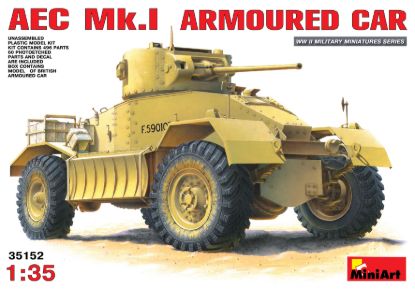
AEC Mk 1 Armoured Car
MiniArt 35152
The Mk I was first used in combat in the North African Campaign late in 1942, where a few vehicles were reportedly fitted with a Crusader tank turret mounting a 6-pounder gun. The Mk II and Mk III took part in the fighting in Europe with British and British Indian Army units, often together with the American-supplied Staghound armoured car. The AEC armoured car with 75 mm gun replaced US half-track 75 mm self-propelled guns in the four fighting squadrons of some armoured car regiments. The vehicle remained in service after the end of the war until replaced by the Alvis Saladin. The Lebanese Army used the car at least until 1976. From 1956 some AEC turrets were added to Lebanese Staghound armoured cars.
$50.00
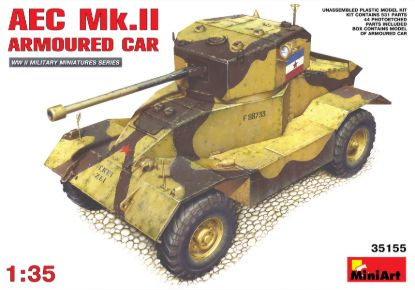
AEC Mk 2 Armoured Car
MiniArt 35155
The Mk I was first used in combat in the North African Campaign late in 1942, where a few vehicles were reportedly fitted with a Crusader tank turret mounting a 6-pounder gun. The Mk II and Mk III took part in the fighting in Europe with British and British Indian Army units, often together with the American-supplied Staghound armoured car. The AEC armoured car with 75 mm gun replaced US half-track 75 mm self-propelled guns in the four fighting squadrons of some armoured car regiments. The vehicle remained in service after the end of the war until replaced by the Alvis Saladin. The Lebanese Army used the car at least until 1976. From 1956 some AEC turrets were added to Lebanese Staghound armoured cars.
$49.00
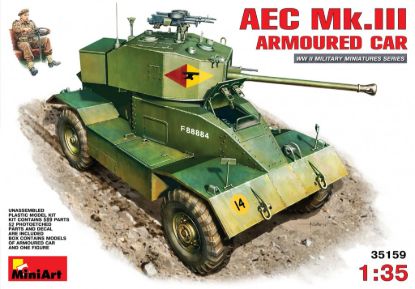
AEC Mk 3 Armoured Car
MiniArt 35159
The Mk I was first used in combat in the North African Campaign late in 1942, where a few vehicles were reportedly fitted with a Crusader tank turret mounting a 6-pounder gun. The Mk II and Mk III took part in the fighting in Europe with British and British Indian Army units, often together with the American-supplied Staghound armoured car. The AEC armoured car with 75 mm gun replaced US half-track 75 mm self-propelled guns in the four fighting squadrons of some armoured car regiments. The vehicle remained in service after the end of the war until replaced by the Alvis Saladin. The Lebanese Army used the car at least until 1976. From 1956 some AEC turrets were added to Lebanese Staghound armoured cars.
$50.00
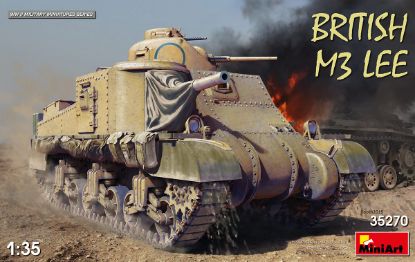
British M3 Lee.
MiniArt 35270
The M3 Lee, officially Medium Tank, M3, was an American medium tank used during World War II. The turret was produced in two different forms, one for US needs and one modified to British requirements to place the radio next to the commander. In British Commonwealth service, the tank was called by two names: tanks employing US-pattern turrets were called "Lee", named after Confederate general Robert E. Lee, while those with British-pattern turrets were known as "Grant", named after Union general Ulysses S. Grant.
$55.00
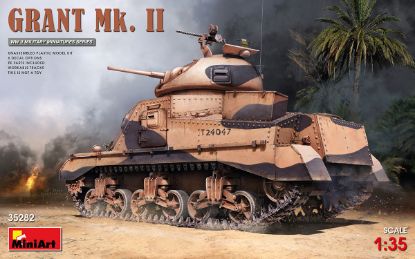
Grant Mk. II
MiniArt 35282
The M3 Lee, officially Medium Tank, M3, was an American medium tank used during World War II. The turret was produced in two different forms, one for US needs and one modified to British requirements to place the radio next to the commander. In British Commonwealth service, the tank was called by two names: tanks employing US-pattern turrets were called "Lee", named after Confederate general Robert E. Lee, while those with British-pattern turrets were known as "Grant", named after Union general Ulysses S. Grant.
$55.00
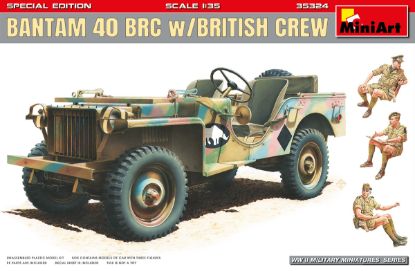
Bantam 40 BRC w/British Crew. Special Edition
MiniArt 35324
Bantam BRC is an American off-road vehicle designed during World War II, constructed in 1940, and the precursor to the Jeep.
$25.00
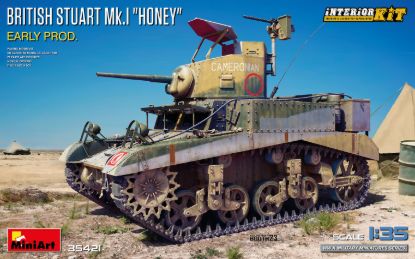
British Stuart Mk.I Honey Early Prod. Interior Kit
MiniArt 35421
The M3 Stuart/light tank M3 was a US light tank of World War II first introduced into service in the British Army in early 1941.
$63.00
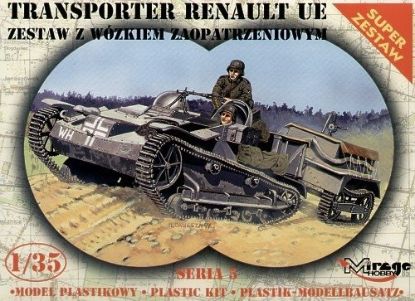
ReNAULT UE with universal transport vehicle
Mirage 355014
The Renault UE(f) Munitionsschlepper played a crucial role in the military operations of both France and Germany during World War II, showcasing the versatility and adaptability of military vehicles in the face of changing battlefield conditions.
$22.00
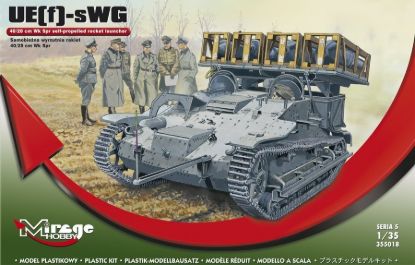
UE(f)-sWG, 40/28cm Wk Spr self-propelled rocket launcher
Mirage 355018
The Renault UE(f) Munitionsschlepper played a crucial role in the military operations of both France and Germany during World War II, showcasing the versatility and adaptability of military vehicles in the face of changing battlefield conditions.
$22.00
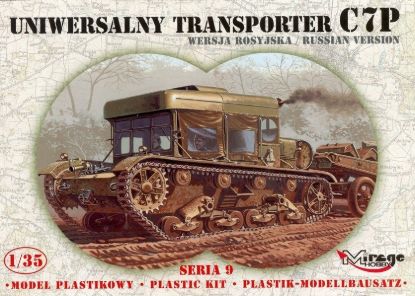
C7P Universal Transport Tractor ( Russian version )
Mirage 35903
The C7P artillery tractor was a significant development in the Polish military's artillery capabilities before and during World War II.
$41.00
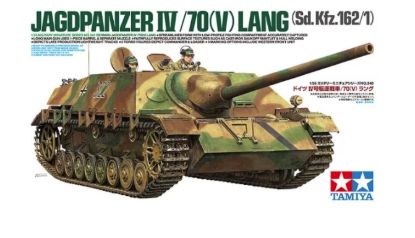
Jagdpanzer IV Lang
Tamiya 35340
The Jagdpanzer IV / Sd.Kfz. 162, was a German tank destroyer based on the Panzer IV chassis and built in three main variants. As one of the casemate-style turretless Jagdpanzer (tank destroyer, literally "hunting tank") designs, it was developed against the wishes of Heinz Guderian, the inspector general of the Panzertruppen, as a replacement for the Sturmgeschütz III (StuG III). Guderian objected against the (in his eyes) needless diversion of resources from Panzer IV tank production, as the StuG III was still more than adequate for its role.
$62.00
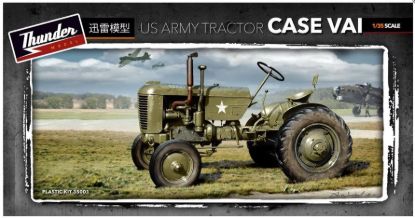
1/35 US Army Case Tractor
Thunder Model TM35001
Case built 15,313 special war tractors and 4,170 tractor engines for the U.S. military and the Allies from 1941 to 1945.
$28.00
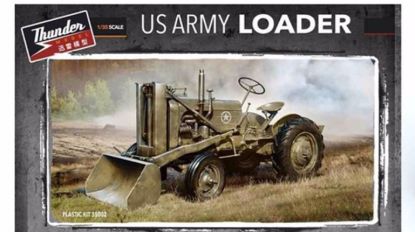
1/35 US Army Loader
Thunder Model TM35002
Case built 15,313 special war tractors and 4,170 tractor engines for the U.S. military and the Allies from 1941 to 1945.
$30.00
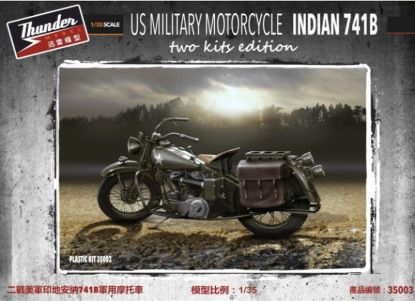
1/35 US Military Indian 741B (2 kits in box)
Thunder Model TM35003
The Indian 841 was developed in response to a U.S. Army request for a military motorcycle capable of withstanding the harsh conditions of desert warfare.
$30.00
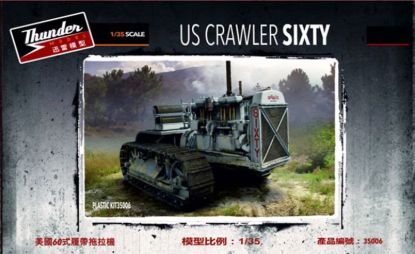
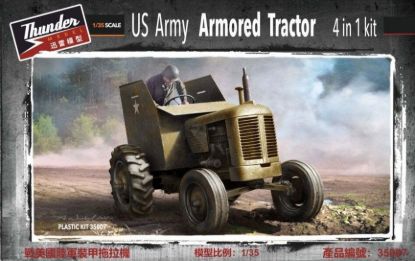
1/35 US Army Armored Tractor
Thunder Model TM35007
Case built 15,313 special war tractors and 4,170 tractor engines for the U.S. military and the Allies from 1941 to 1945.
$35.00