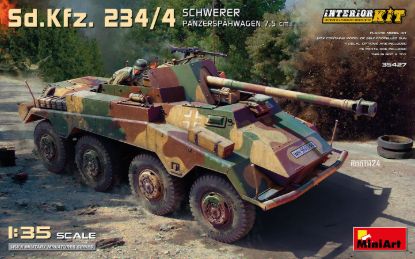
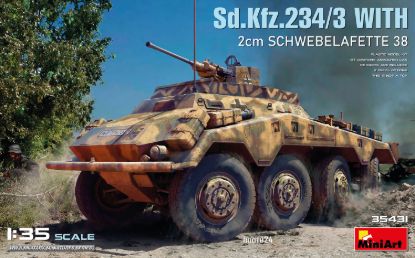
The SdKfz 234 Puma was a German eight-wheeled heavy armored car developed during World War II. After it was clear that a stronger armament was necessary to fight the Soviet tank units, the SdKfz 234/3 with a short 7.5 cm gun and then the SdKfz 234/4 with a long 7.5 cm Pak 40, which were rigidly mounted to the front in an open top stand, appeared. The Puma was primarily designed for reconnaissance missions, but its firepower (especially in the 234/2 variant) made it capable of engaging enemy light armor. Its excellent mobility and range allowed it to operate effectively behind enemy lines. The SdKfz 234 series represented the pinnacle of German armored car design during WWII, combining mobility, firepower, and reasonable protection. The diesel engine provided superior range compared to most contemporary vehicles.
The SdKfz 234 Puma was a German eight-wheeled heavy armored car developed during World War II. After it was clear that a stronger armament was necessary to fight the Soviet tank units, the SdKfz 234/3 with a short 7.5 cm gun and then the SdKfz 234/4 with a long 7.5 cm Pak 40, which were rigidly mounted to the front in an open top stand, appeared. The Puma was primarily designed for reconnaissance missions, but its firepower (especially in the 234/2 variant) made it capable of engaging enemy light armor. Its excellent mobility and range allowed it to operate effectively behind enemy lines. The SdKfz 234 series represented the pinnacle of German armored car design during WWII, combining mobility, firepower, and reasonable protection. The diesel engine provided superior range compared to most contemporary vehicles.
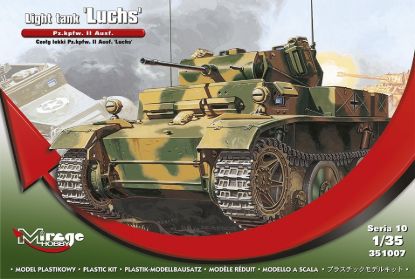
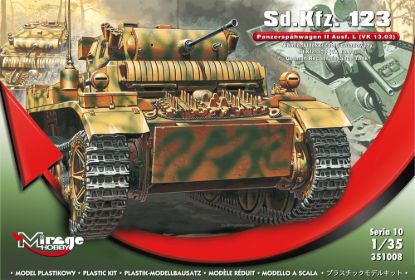
The Panzerkampfwagen II Ausf. L "Luchs" (German for lynx) is a German light tank from the Second World War, developed between 1940 and 1942 by Daimler-Benz and MAN. The Luchs was the only Panzer II design with the Schachtellaufwerk overlapping/interleaved road wheels and "slack track" configuration to enter series production, with 100 being built from September 1943 to January 1944 in addition to the conversion of the four Ausf. M tanks. Originally given the experimental designation VK 13.03, it was adopted under the alternate name Panzerspähwagen II and given the popular name Luchs.
The Panzerkampfwagen II Ausf. L "Luchs" (German for lynx) is a German light tank from the Second World War, developed between 1940 and 1942 by Daimler-Benz and MAN. The Luchs was the only Panzer II design with the Schachtellaufwerk overlapping/interleaved road wheels and "slack track" configuration to enter series production, with 100 being built from September 1943 to January 1944 in addition to the conversion of the four Ausf. M tanks. Originally given the experimental designation VK 13.03, it was adopted under the alternate name Panzerspähwagen II and given the popular name Luchs.
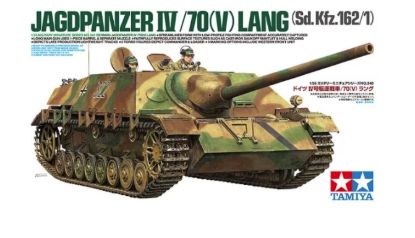
The Jagdpanzer IV / Sd.Kfz. 162, was a German tank destroyer based on the Panzer IV chassis and built in three main variants. As one of the casemate-style turretless Jagdpanzer (tank destroyer, literally "hunting tank") designs, it was developed against the wishes of Heinz Guderian, the inspector general of the Panzertruppen, as a replacement for the Sturmgeschütz III (StuG III). Guderian objected against the (in his eyes) needless diversion of resources from Panzer IV tank production, as the StuG III was still more than adequate for its role.
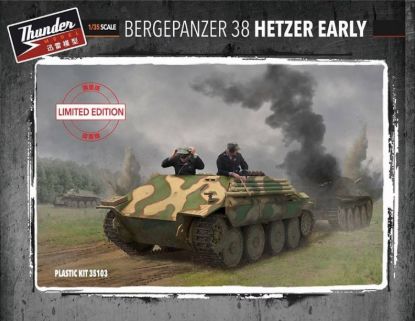
The light recovery vehicle Bergepanzer 38 or Bergepanzerwagen 38 was based on the German Jagdpanzer 38, the Hetzer tank destroyer. This light recovery vehicle, German designation Sd.Kfz. 136, was used with the Jagdpanzer units and helped repair the tank destroyers, it was capable of towing or pulling the Hetzer tanks if broken down or stuck. Between 170 to 181 were built from August 1944 until the end of the war. It used a Fug 5 radio set and was armed with a MG 34.


![Picture of Germany U-BOOT U-511 - IX C [turm I + WGr42]](https://afvhobbyhub.com/images/thumbs/0022995_germany-u-boot-u-511-ix-c-turm-i-wgr42_415.jpeg "Show details for Germany U-BOOT U-511 - IX C [turm I + WGr42]")