

Products tagged with 'Heavy Tank'
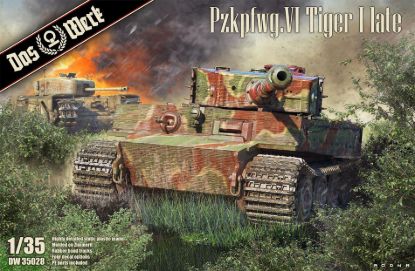
PzKpfwg.VI Tiger I late
Das Werk DW35028
From the early days of combat against this tank in WW2 until the present day, the fame of the Tiger spans, in equal amounts, its real development history, combat performance, and fandom. It is a tank with many flaws and one whose mystique, even back in WW2, was out of all proportion to its utility and service as a combat vehicle. Yet, despite its flaws and problems, the tank remains a potent symbol of WW2 and, for many, it is the tank which served as their introduction to the world of armored fighting vehicles.
$82.00
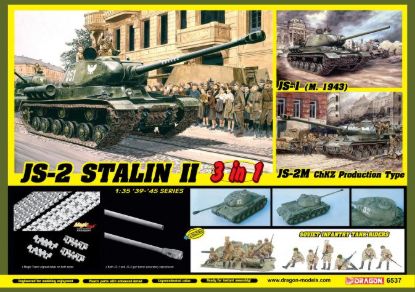
JS-2 STALIN II (3 IN 1) + SOVIET INFANTRY TANK RIDERS
Dragon Models 6537
The JS-1, also known as the IS-1, was a heavy tank developed by the Soviet Union during World War II. It was designed to counter the German Panther and Tiger I tanks and was primarily used as a breakthrough tank.
$60.00
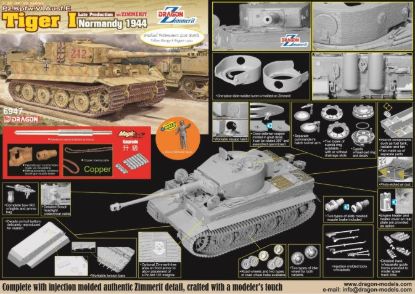
TIGER I LATE PRODUCTION w/ZIMMERIT (NORMANDY 1944)
Dragon Models 6947
From the early days of combat against this tank in WW2 until the present day, the fame of the Tiger spans, in equal amounts, its real development history, combat performance, and fandom. It is a tank with many flaws and one whose mystique, even back in WW2, was out of all proportion to its utility and service as a combat vehicle. Yet, despite its flaws and problems, the tank remains a potent symbol of WW2 and, for many, it is the tank which served as their introduction to the world of armored fighting vehicles.
$60.00
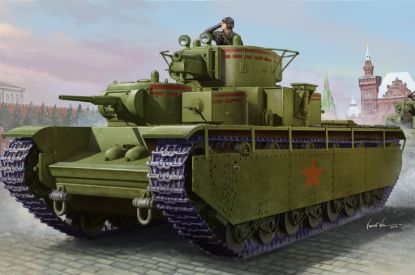
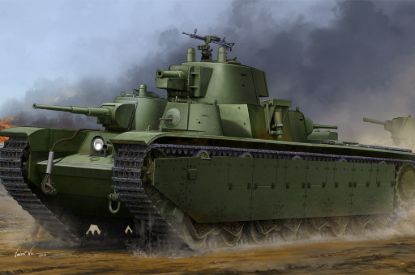
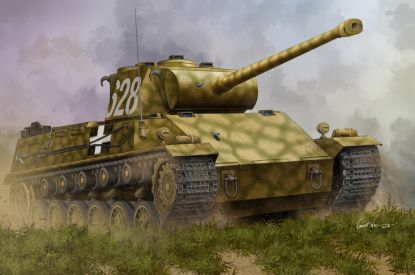
Hungarian 44M Tas
Hobby Boss 83850
The 44M Tas was a Hungarian heavy tank/medium tank design of World War II.
$52.00
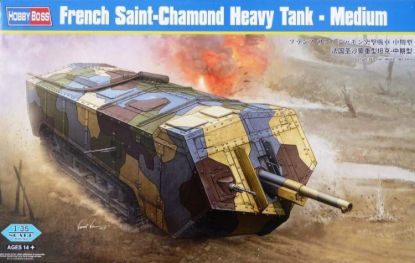
French Saint-Chamond Heavy Tank - Medium
Hobby Boss 83859
The Saint-Chamond was the second French tank to enter service during the First World War, with 400 manufactured from April 1917 to July 1918.
$45.00
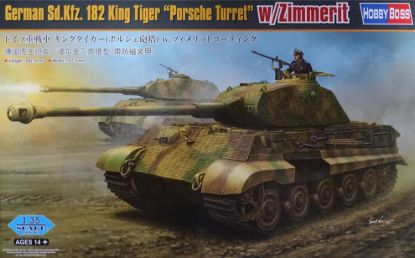
Germany Sd.Kfz.182 King Tiger Porsche turret w/zimmerit
Hobby Boss 84530
The Tiger II was the successor to the Tiger I, combining the latter's thick armour with the armour sloping used on the Panther medium tank. Contemporaneous Allied soldiers often called it the King Tiger or Royal Tiger. It was the costliest German tank to produce at the time. The tank weighed almost 70 tonnes and was protected by 100 to 185 mm (3.9 to 7.3 in) of armour to the front. It was armed with the long barrelled (71 calibres) 8.8 cm KwK 43 anti-tank cannon. The chassis was also the basis for the Jagdtiger turretless Jagdpanzer anti-tank vehicle.
$48.00
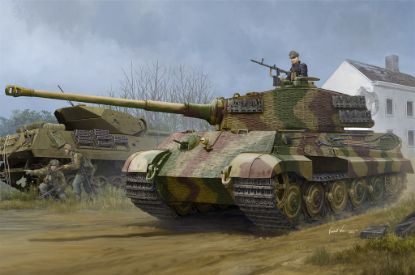
Pz.Kpfw.VI Sd.Kfz.182 Tiger II (Henschel 1944 Production) w/ Zimmerit
Hobby Boss 84531
The Tiger II was the successor to the Tiger I, combining the latter's thick armour with the armour sloping used on the Panther medium tank. Contemporaneous Allied soldiers often called it the King Tiger or Royal Tiger. It was the costliest German tank to produce at the time. The tank weighed almost 70 tonnes and was protected by 100 to 185 mm (3.9 to 7.3 in) of armour to the front. It was armed with the long barrelled (71 calibres) 8.8 cm KwK 43 anti-tank cannon. The chassis was also the basis for the Jagdtiger turretless Jagdpanzer anti-tank vehicle.
$48.00
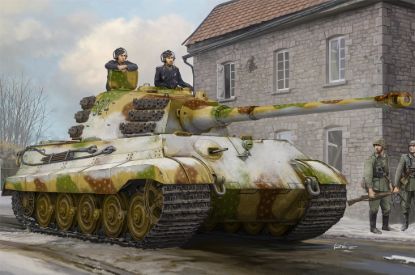
Pz.Kpfw.VI Sd.Kfz.182 Tiger II (Henschel Feb-1945 Production)
Hobby Boss 84532
The Tiger II was the successor to the Tiger I, combining the latter's thick armour with the armour sloping used on the Panther medium tank. Contemporaneous Allied soldiers often called it the King Tiger or Royal Tiger. It was the costliest German tank to produce at the time. The tank weighed almost 70 tonnes and was protected by 100 to 185 mm (3.9 to 7.3 in) of armour to the front. It was armed with the long barrelled (71 calibres) 8.8 cm KwK 43 anti-tank cannon. The chassis was also the basis for the Jagdtiger turretless Jagdpanzer anti-tank vehicle.
$48.00
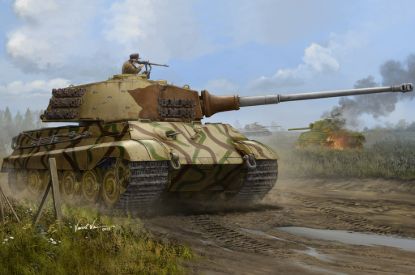
Pz.Kpfw.VI Sd.Kfz.182 Tiger II ( Henschel July-1945 )
Hobby Boss 84533
The Tiger II was the successor to the Tiger I, combining the latter's thick armour with the armour sloping used on the Panther medium tank. Contemporaneous Allied soldiers often called it the King Tiger or Royal Tiger. It was the costliest German tank to produce at the time. The tank weighed almost 70 tonnes and was protected by 100 to 185 mm (3.9 to 7.3 in) of armour to the front. It was armed with the long barrelled (71 calibres) 8.8 cm KwK 43 anti-tank cannon. The chassis was also the basis for the Jagdtiger turretless Jagdpanzer anti-tank vehicle.
$45.00
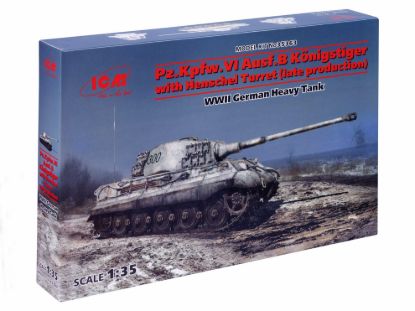
Pz.Kpfw.VI Ausf.B King Tiger with Henschel Turret (late production), WWII Germany Heavy Tank
ICM 35363
The Tiger II was the successor to the Tiger I, combining the latter's thick armour with the armour sloping used on the Panther medium tank. Contemporaneous Allied soldiers often called it the King Tiger or Royal Tiger. It was the costliest German tank to produce at the time. The tank weighed almost 70 tonnes and was protected by 100 to 185 mm (3.9 to 7.3 in) of armour to the front. It was armed with the long barrelled (71 calibres) 8.8 cm KwK 43 anti-tank cannon. The chassis was also the basis for the Jagdtiger turretless Jagdpanzer anti-tank vehicle.
$60.00
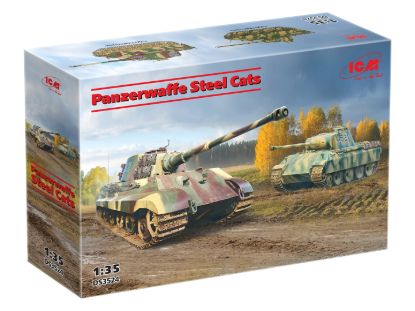
Panzerwaffe steel cats (Pz.Kpfw.V Panther Ausf.D, Pz.Kpfw.VI Ausf.B King Tiger)
ICM DS3524
The Best and most renowned tanks of the Panzerwaffe; both the Panther Ausf D and the Pz.Kpfw. VI Ausf. B AKA King Tiger, are included in the kit.
$83.00
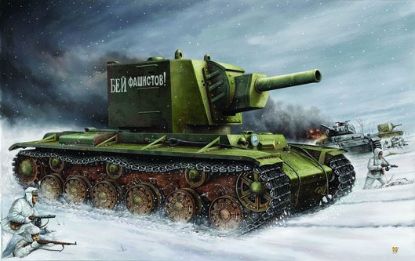
Soviet KV Heavy Tank BIG TURRET
Trumpeter 00311
The KV-2, also known as the Kliment Voroshilov heavy tank, was developed during World War II as a heavy tank designed to provide heavy firepower and strong armor support for infantry and other tanks.
$45.00
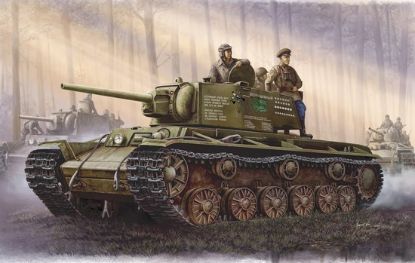
KV-I Model 1942 Simplified Turret Tank
Trumpeter 00358
The KV-1 tank, a symbol of Soviet engineering during World War II, played a crucial role on the Eastern Front.
$32.00
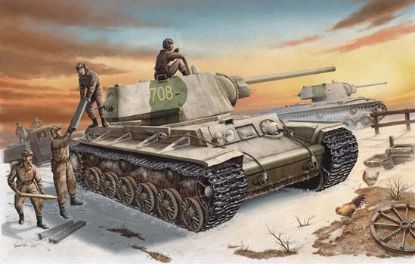
KV-I Model 1942 heavy cast turret
Trumpeter 00359
The KV-1 tank, a symbol of Soviet engineering during World War II, played a crucial role on the Eastern Front.
$32.00
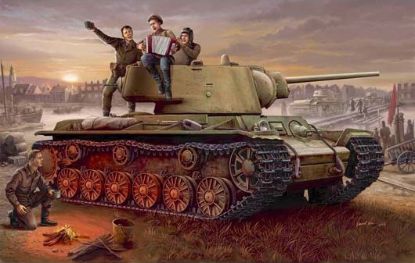
KV-I Model 1942 Lightweight Cast Tank
Trumpeter 00360
The KV-1 tank, a symbol of Soviet engineering during World War II, played a crucial role on the Eastern Front.
$32.00
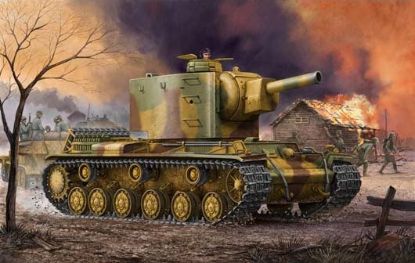
PzKpfw 754/r/ Tank (K-1)
Trumpeter 00367
The KV-1 tank, a symbol of Soviet engineering during World War II, played a crucial role on the Eastern Front.
$26.00
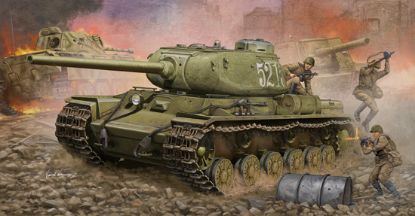
Soviet KV-85 Heavy Tank
Trumpeter 01569
The KV-85 heavy tank was not an epochal machine in the history of Russian tank design and construction. Although it was not produced in the thousands, this tank still made a contribution to the victory over fascism.
$32.00
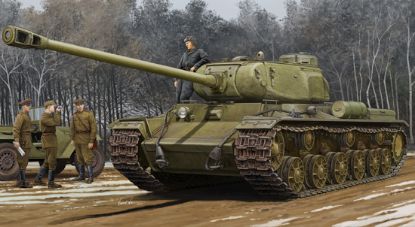
Soviet KV-122 Heavy Tank
Trumpeter 01570
The development of the KV-122 was driven by the evolution of threats on the Eastern Front: after the Battle of Kursk, German tank divisions received King Tigers with frontal armor up to 180 mm thick, making the KV-85's 85 mm guns ineffective at ranges beyond 500 meters.
$32.00
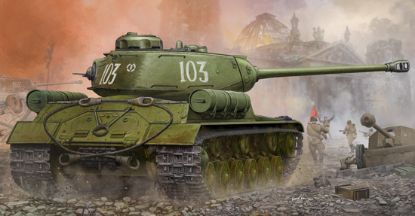
Soviet JS-2 Heavy Tank
Trumpeter 05588
The JS-2's military history is marked by its effectiveness in combat against German Panther tanks, showcasing its capabilities and the legacy it left behind. Its design and performance set a precedent for Soviet tank development doctrine for decades to come.
$75.00
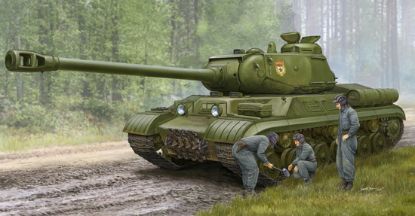
Soviet JS-2M Heavy Tank - Early
Trumpeter 05589
In 1957 the Soviets upgraded the pre-existing IS-2 tanks (although received IS-2M index only in 1960) with new hull sides with integrated stowage boxes, T-10M tracks and roadwheels, machine gun in turret rear replaced by ventilation fan and many other minor technical improvements.
$75.00
- 1
- 2