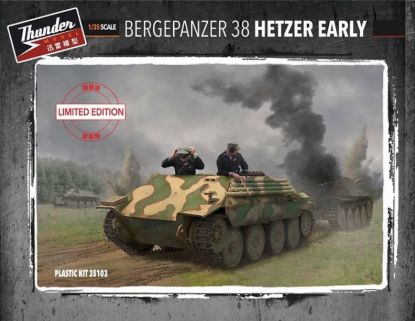
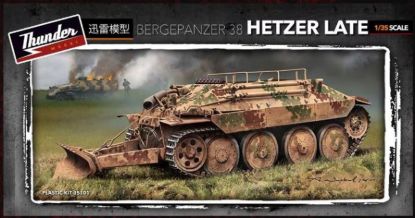
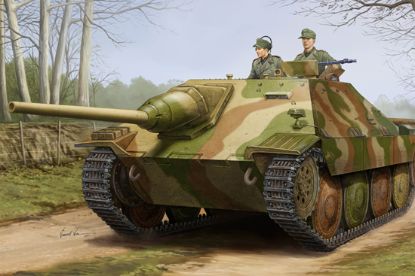
The light recovery vehicle Bergepanzer 38 or Bergepanzerwagen 38 was based on the German Jagdpanzer 38, the Hetzer tank destroyer. This light recovery vehicle, German designation Sd.Kfz. 136, was used with the Jagdpanzer units and helped repair the tank destroyers, it was capable of towing or pulling the Hetzer tanks if broken down or stuck. Between 170 to 181 were built from August 1944 until the end of the war. It used a Fug 5 radio set and was armed with a MG 34.
The light recovery vehicle Bergepanzer 38 or Bergepanzerwagen 38 was based on the German Jagdpanzer 38, the Hetzer tank destroyer. This light recovery vehicle, German designation Sd.Kfz. 136, was used with the Jagdpanzer units and helped repair the tank destroyers, it was capable of towing or pulling the Hetzer tanks if broken down or stuck. Between 170 to 181 were built from August 1944 until the end of the war. It used a Fug 5 radio set and was armed with a MG 34.
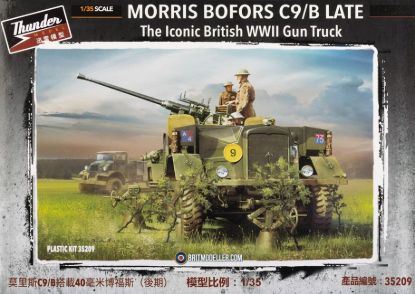
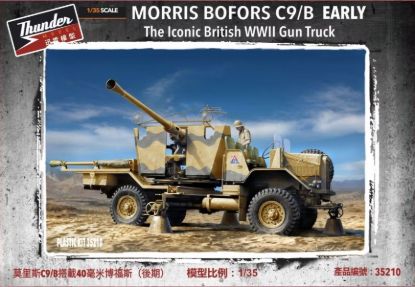
This Self-Propelled Anti-Aircraft Gun (SPAAG) began development in 1941 as a private venture by the Morris-Commercial company. Morris was one of Britain’s most famous motor companies, renowned for their cars. They also built a number of vehicles for the military, such as the Morris CS9 Armoured Car and the Morris Light Reconnaissance Car. One of their most famous military vehicles was the Morris C8 Field Artillery Tractor (FAT) also known as ‘Quad’. The Morris C9/B is based on this Tractor and was armed with the 40mm Bofors Anti-Aircraft Gun.
This Self-Propelled Anti-Aircraft Gun (SPAAG) began development in 1941 as a private venture by the Morris-Commercial company. Morris was one of Britain’s most famous motor companies, renowned for their cars. They also built a number of vehicles for the military, such as the Morris CS9 Armoured Car and the Morris Light Reconnaissance Car. One of their most famous military vehicles was the Morris C8 Field Artillery Tractor (FAT) also known as ‘Quad’. The Morris C9/B is based on this Tractor and was armed with the 40mm Bofors Anti-Aircraft Gun.
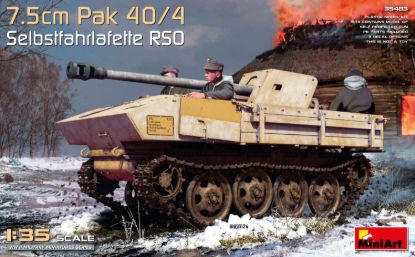
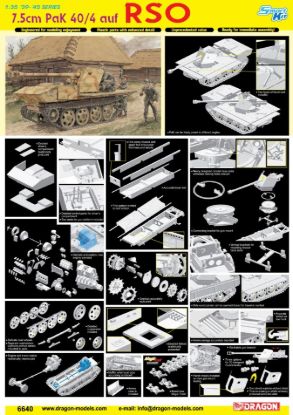
The Raupenschlepper Ost (RSO) was a fully tracked, lightweight vehicle developed by Germany during World War II. It was designed to address the mobility challenges faced by wheeled and half-tracked vehicles in the mud and snow of the Eastern Front. The RSO was a simple, robust, and lightweight tractor primarily used to tow light to medium artillery and for general transport of supplies and personnel. Its all-steel tracks and high ground clearance provided superior mobility in challenging terrain, making it an indispensable workhorse for German logistics in the East from 1942 until the end of the war.
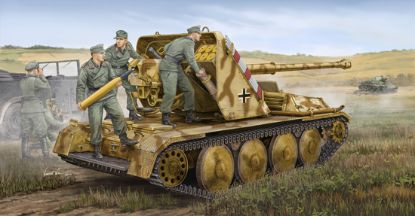
As the German army faced ever increasing numbers of Allied armour, more ways were found to place anti-tank weaponry on already existing chassis, in order to try and counter the Allied numerical superiority. The Raupenschlepper Ost (RSO) was no exception to the armed conversions that were built upon so many German vehicles at the time. The decision was made in 1943 to take the well proven battle tractor and place a Pak 40/4 on its back, in order to provide more mobile anti-tank capabilities on the front line.
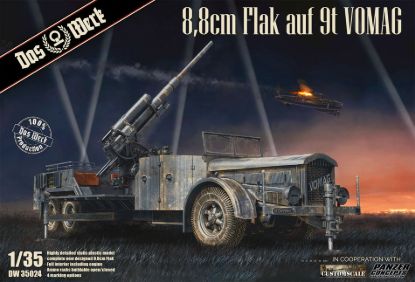
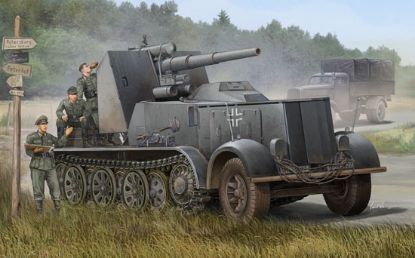
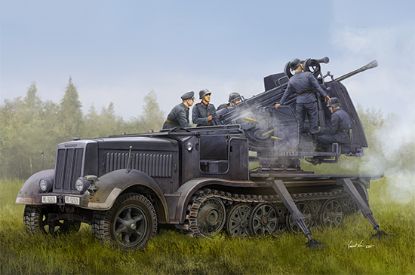
8.8 cm Flak 18 anti-aircraft guns were mounted on fifteen Sd.Kfz. 9s in 1940 as the 8.8 cm Flak 18 (Sfl.) auf Zugkraftwagen 18t (Sd.Kfz. 9) for anti-tank duties. The crew and engine compartments were lightly (14.5 mm (0.57 in)), but completely, armored, which limited the gun's ability to fire directly ahead. A platform with drop-down sides was fitted for the gun. Outriggers were necessary to brace the platform sides to support the weight of the gun crew.
The Sonderkraftfahrzeug 8 ("special motorized vehicle 8"), usually abbreviated to Sd.Kfz. 8, was a German half-track designed by Daimler-Benz that saw widespread use in World War II. Its main roles were as a prime mover for heavy towed guns such as the 21 cm Mörser 18, the 17 cm Kanone 18 and the 10.5 cm FlaK 38. It also served as an infantry transport. Approximately 4,000 were produced between 1938 and 1945. It was used in every campaign fought by the Germans in World War II, notably the Invasion of Poland, the Battle of France, the Balkans Campaign, the Eastern Front, the North African Campaign, the Battle of Normandy and the Italian Campaign.
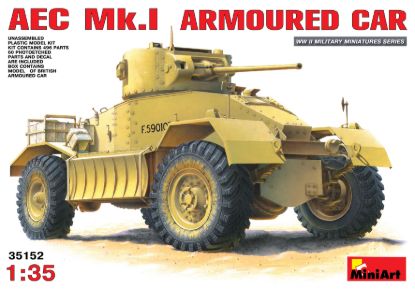
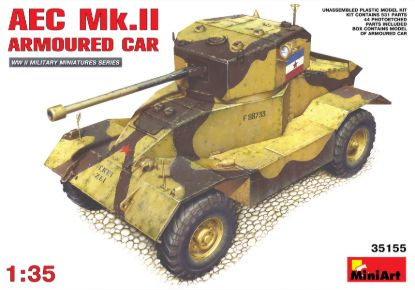
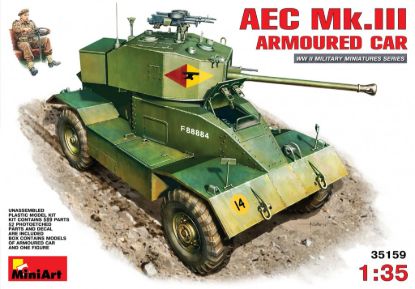
The Mk I was first used in combat in the North African Campaign late in 1942, where a few vehicles were reportedly fitted with a Crusader tank turret mounting a 6-pounder gun. The Mk II and Mk III took part in the fighting in Europe with British and British Indian Army units, often together with the American-supplied Staghound armoured car. The AEC armoured car with 75 mm gun replaced US half-track 75 mm self-propelled guns in the four fighting squadrons of some armoured car regiments. The vehicle remained in service after the end of the war until replaced by the Alvis Saladin. The Lebanese Army used the car at least until 1976. From 1956 some AEC turrets were added to Lebanese Staghound armoured cars.
The Mk I was first used in combat in the North African Campaign late in 1942, where a few vehicles were reportedly fitted with a Crusader tank turret mounting a 6-pounder gun. The Mk II and Mk III took part in the fighting in Europe with British and British Indian Army units, often together with the American-supplied Staghound armoured car. The AEC armoured car with 75 mm gun replaced US half-track 75 mm self-propelled guns in the four fighting squadrons of some armoured car regiments. The vehicle remained in service after the end of the war until replaced by the Alvis Saladin. The Lebanese Army used the car at least until 1976. From 1956 some AEC turrets were added to Lebanese Staghound armoured cars.
The Mk I was first used in combat in the North African Campaign late in 1942, where a few vehicles were reportedly fitted with a Crusader tank turret mounting a 6-pounder gun. The Mk II and Mk III took part in the fighting in Europe with British and British Indian Army units, often together with the American-supplied Staghound armoured car. The AEC armoured car with 75 mm gun replaced US half-track 75 mm self-propelled guns in the four fighting squadrons of some armoured car regiments. The vehicle remained in service after the end of the war until replaced by the Alvis Saladin. The Lebanese Army used the car at least until 1976. From 1956 some AEC turrets were added to Lebanese Staghound armoured cars.
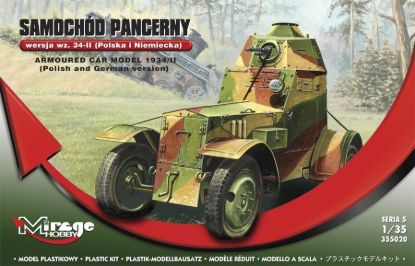
Samochód pancerny wz. 34 ("armored car, year 1934 model"), was a standard light armored car used by the Polish Army during the September Campaign of 1939.
The Sd.Kfz. 124 Wespe (German for "wasp"), also known as Leichte Feldhaubitze 18/2 auf Fahrgestell Panzerkampfwagen II (Sf.) ("Light field howitzer 18 on Panzer II chassis (self-propelled)"), is a German self-propelled gun developed and used during the Second World War. It was based on a modified Panzer II chassis.
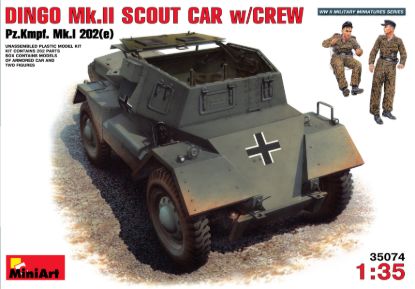
The Daimler Dingo, a variant of the Pz.Kmpf. Mk.I 202(e), was used by the Germans during the war, where it was transformed into the Pz.Kpfw.Mk.I 202. The Dingo's success in combat led to its continued use by various nations, including Cyprus, Portugal, and Sri Lanka, until the mid-1950s.
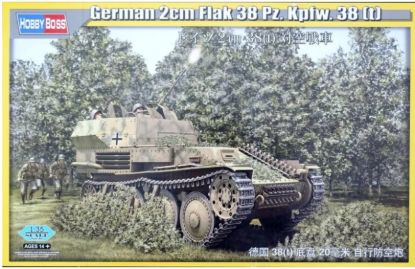
The Flakpanzer 38(t), officially named Flakpanzer 38(t) auf Selbstfahrlafette 38(t) Ausf M (Sd.Kfz. 140), was a German self-propelled anti-aircraft gun used in World War II. It is sometimes incorrectly referred to as the Gepard, which may lead to confusion with the unrelated Flakpanzer Gepard.
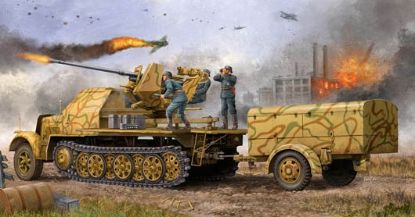
The Sd.Kfz. 7 was a half-track military vehicle used by the German Army, Luftwaffe and Waffen-SS during the Second World War. Sd.Kfz. is an abbreviation of the German word Sonderkraftfahrzeug, "special purpose vehicle". A longer designation is mittlerer Zugkraftwagen 8t, Sd.Kfz. 7, "medium towing motor vehicle 8t".
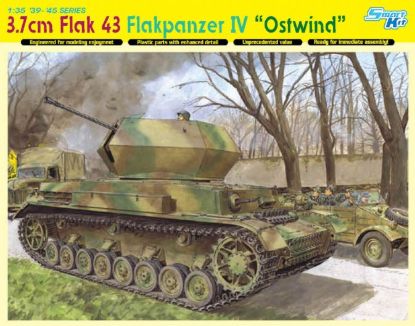
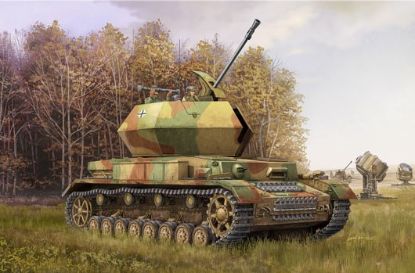
The Flakpanzer IV "Ostwind" was a significant development in the German military's efforts to counter the increasing air threat during World War II. Its primary role was as an anti-aircraft weapon, but it also provided protection against light vehicles and minor fortifications.
The Sd.Kfz. 7 was a half-track military vehicle used by the German Army, Luftwaffe and Waffen-SS during the Second World War. Sd.Kfz. is an abbreviation of the German word Sonderkraftfahrzeug, "special purpose vehicle". A longer designation is mittlerer Zugkraftwagen 8t, Sd.Kfz. 7, "medium towing motor vehicle 8t".
The German Waffentrager (weapon carrier), was formulated by the artillery and technical supply department at the end of 1942. It was assumed that two main types of carriers would be developed in parallel. The first one could be considered light and was supposed to mount a 75 mm PaK 40L/70 anti-tank gun, a 105 mm FH 18/40 howitzer, or a 37 mm FlaK anti-aircraft gun. The second type of carrier was intended for the more powerful 88 mm PaK 43 L/71 gun, the 150 mm FH 43 howitzer, and the 128 mm K43 gun.
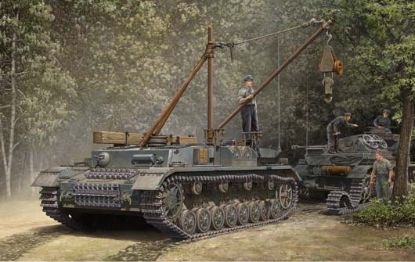
The Bergepanzer IV was a German armoured recovery vehicle developed in the 1940s based on the late Panzer IV chassis. It was designed to recover damaged tanks and was based on the Panzer IV chassis.
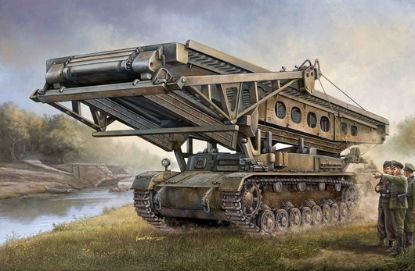
The Bruckenleger IV b was a bridge-layer mounted on the hull of the Panzer IV Ausf. D, with a total of twenty units built. These vehicles were supplied to the BL Zug (Bridging Platoon) of the 1st, 2nd, 3rd, 5th, and 10th Panzer Divisions, serving in France and the Low Countries before being withdrawn in mid-1941. The Bruckenleger IV b was known for its role in overcoming obstacles during combat, but its service with the troops was not rated well, leading to the decision to cancel further production and convert existing platforms back to conventional tanks.
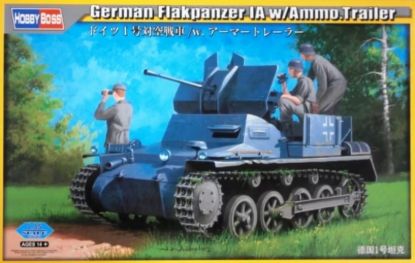
The Panzer I saw combat in the Spanish Civil War and WWII. The Panzer I's design history can be traced to the British Carden Loyd tankette, of which it borrowed much of its track and suspension design.
The Jagdpanzer 38 (Sd.Kfz. 138/2), originally the Leichter Panzerjäger 38(t), known mostly post-war as Hetzer, was a German light tank destroyer of the Second World War based on a modified Czechoslovak Panzer 38(t) chassis.
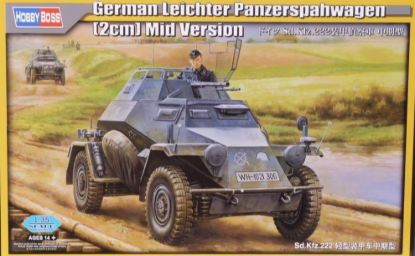
The Sd.Kfz. 222's development and deployment were marked by its success in early campaigns against unprepared opponents, but it faced significant vulnerabilities when confronting well-equipped Allied forces. The vehicle's armor-piercing vulnerability was discovered during tests, leading to its eventual replacement by the Sd.Kfz. 234 Puma. The Sd.Kfz. 222's history is a testament to the complexities of armored vehicle development and the impact of engineering compromises on battlefield performance.
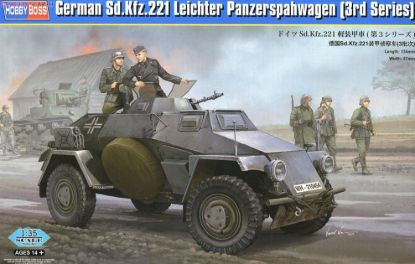
The Leichter Panzerspähwagen (Sd.Kfz. 221) was the first in a series of light reconnaissance vehicles designed to meet operational requirements including reliability, an ability to run on a variety of grades of fuel, simple construction and good off-road performance.
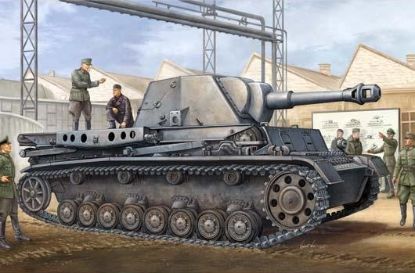
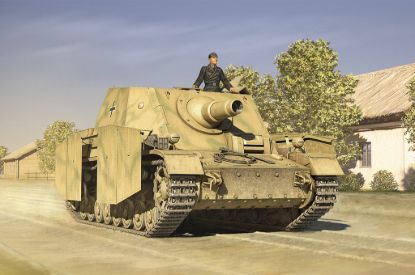
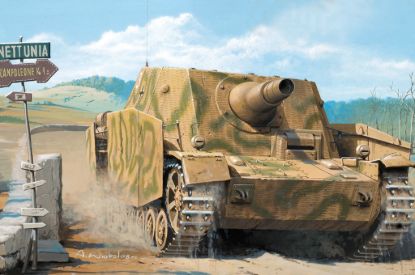
The Sturmpanzer (also known as Sturmpanzer 43 or Sd.Kfz. 166) is a German armoured infantry support gun based on the Panzer IV chassis used in the Second World War. It was used at the Battles of Kursk, Anzio, Normandy, and was deployed in the Warsaw Uprising. It was known by the nickname Brummbär (German: "Grouch")[Note 1] by Allied intelligence, a name which was not used by the Germans. German soldiers nicknamed it the "Stupa", a contraction of the term Sturmpanzer. Just over 300 vehicles were built and they were assigned to four independent battalions.
The Sturmpanzer (also known as Sturmpanzer 43 or Sd.Kfz. 166) is a German armoured infantry support gun based on the Panzer IV chassis used in the Second World War. It was used at the Battles of Kursk, Anzio, Normandy, and was deployed in the Warsaw Uprising. It was known by the nickname Brummbär (German: "Grouch")[Note 1] by Allied intelligence, a name which was not used by the Germans. German soldiers nicknamed it the "Stupa", a contraction of the term Sturmpanzer. Just over 300 vehicles were built and they were assigned to four independent battalions.
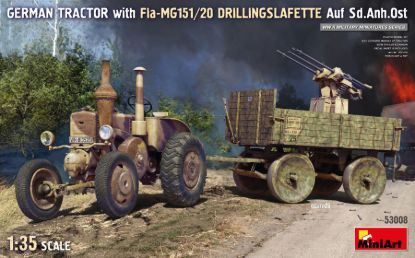
The Lanz Bulldog tractors played a significant role in military operations during World War I and World War II. They were used for carrying heavy artillery and other military equipment from railway stations to battlefields. During World War I, Lanz Bulldogs were also utilized for transporting heavy goods, including artillery and aircraft, by the German military.